Name the foam
18-25 mm closed-cell is written as a thickness, not as a marketing ice-day number without a method.
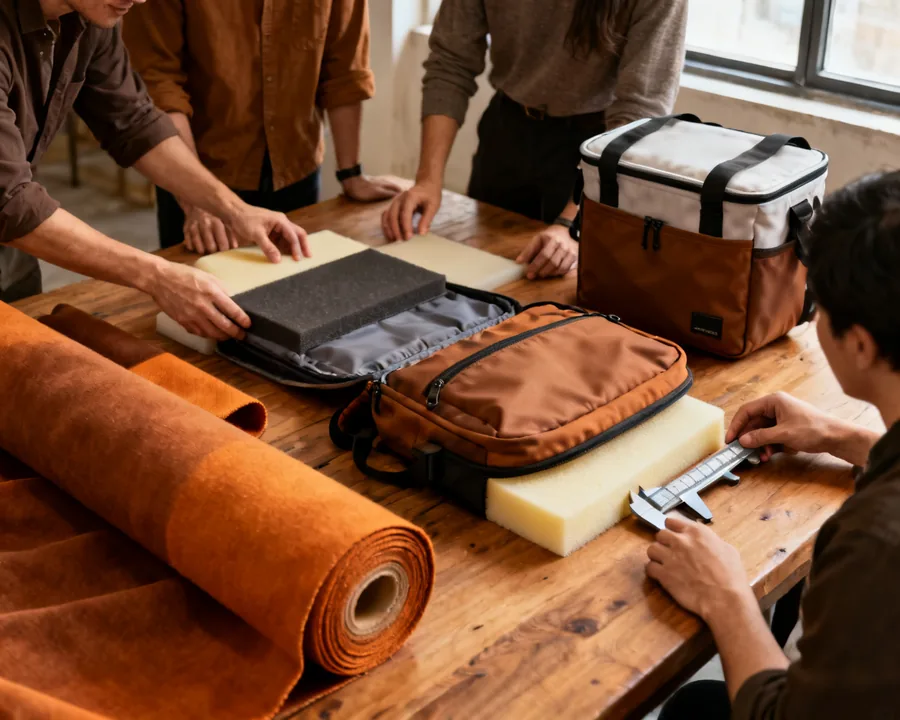
Cooler-first pack house
Yeti grew as a cooler-bag house that treats foam thickness and liner welds as specifications, not slogans. The program desk now helps retailers, wholesalers and OEM partners match litre windows and insulation to channel mix instead of stretching one last across every activity. This site quotes outdoor bags and backpacks; mountain-bike frames belong to a different company and are not on the line card.
The early wholesale cartons in 2011 were soft cooler bags aimed at specialty camp shops, not 24L campus classics. The bet was closed-cell foam between 18 and 25 mm, a TPU liner and a leak-resistant zipper that could survive a grocery-to-trail day. That choice still governs which RFQs we accept. A 2022 bookstore brief that asked us to drop 25 mm foam into a 22L commute last was declined in writing; the empty-weight and hip-belt geometry would have been theatre.
If the brief needs ice retention language, we say so on the family sheet instead of stuffing foam into a daypack body.
In 2014 the Crossroads-class travel last added lockable zippers and a stowable laptop sleeve for airline days. 2016 is when producing sites entered ISO 9001:2015 audit files we still attach to OEM dossiers. 2017 opened Panga-class welded TPU dry packs as a separate family, not as a claim that every Yeti SKU is a river bag. 2019 added amfori BSCI papers. 2021 locked OEKO-TEX STANDARD 100 mill scope on textile contact parts. 2023-2024 added Ranchero and 25L Cayo daypacks as uninsulated siblings, not as a claim that every Yeti SKU is a cooler. We still refuse to write 100% waterproof on a DWR or PU-coated daypack. Trail rain at 800-1,500 mm hydrostatic head plus a cover is the honest range. River crossings belong on welded roll-tops, which we quote as a separate family. Hard rotomolded coolers sit outside this bag program and are not substituted silently for a soft pack.
18-25 mm closed-cell is written as a thickness, not as a marketing ice-day number without a method.
DWR, PU coat and RF-welded TPU are written as three stacks, never as one weatherproof word.
Cooler, travel, dry bag, daypack and duffel do not share a liner story. Daypacks skip foam on purpose.
Hangtags, care labels and mill certificates leave the desk before a private-label colorway is locked.
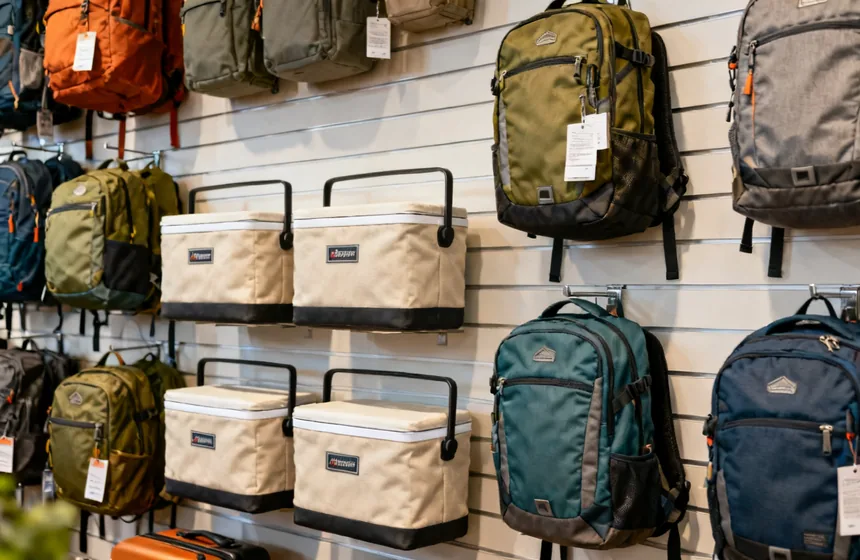
A 2023 Texas Hill Country shop sold 18-30L daypacks faster than 70L expedition lasts for weekday trail use. Customers already carried a bottle and a light layer; they did not want a full overnight chassis. That season is why we still quote a 25L Cayo last and a framed hiking last as two families, not one stretchable SKU.
Youth packs sold into the United States carry CPSIA tracking on the carton when the SKU is marketed to children. Adult cooler bags do not borrow that mark. We will not print a cartoon character license we do not hold.
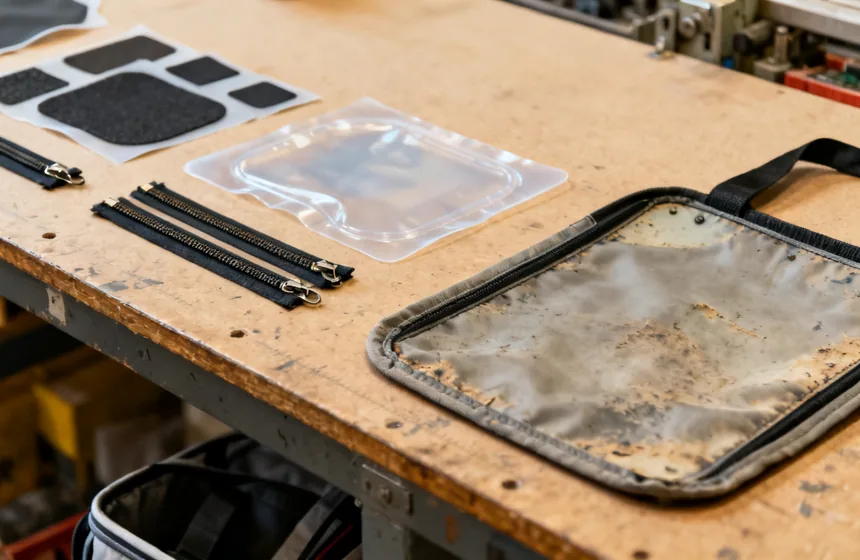
From 2021 through 2025 the desk logged zipper and buckle replacements more often than shell tears on 420-600D bodies. That is why spare-part lists now ship with OEM proposals. A failed PU liner is still a replacement conversation, because recoating a cracked film in the field is not a reliable fix. Foam that has taken a set after a hot-car weekend is also a replacement, not a warranty theatre.
Club orders in 2024 used woven or screen marks on 600D overlays. We declined two sublimation briefs that wanted photo prints on welded TPU, because flex at the weld ate the ink in a directional rub check. The dispute — sublimation versus screen or woven — belongs on the fabric, not on the river-contact zone.
Write to the desk with channel, litre window and whether you need stock or OEM. The form below uses the same contract as the header window; this page is the longer working note.